
Speakers 2026
To see the full list, please click on this link
Bénédicte FAIVRE TAVIGNOT
Professor of Strategy and Business Policy at HEC and co-founder of the S&O Institute (Society & Organisations)
Bénédicte Faivre-Tavignot is an Associate Professor of Strategy (Education Faculty) at HEC Paris and co-founder of the S&O Institute (Society & Organizations), which seeks to redefine the role of business in society through research, teaching, and action. In 2003, she co-created HEC Paris’s Sustainable Development Master’s program and co-founded the HEC Social Business/Enterprise and Poverty Chair, now the Center for Inclusive Economics—the social hub of S&O—which she co-directs. She also co-founded the Action Tank Enterprise and Poverty, a social innovation incubator bringing together major corporations, public authorities, and civil society. After earning her HEC diploma in 1988 and a PhD in Management Science, she spent 15 years in consulting. Her research focuses on reverse innovation and strategic renewal—exploring how inclusive business approaches drive transformative strategies.
Debate 3 • The public interest: what responsibility be incumbent upon businesses ?
Didier FASSIN
Anthropologist, sociologist, physician, professor at the Collège de France, professor of social sciences at the Institute for Advanced Study in Princeton
Didier Fassin is a French anthropologist, sociologist, and physician who taught at the Faculty of Medicine at Pierre-et-Marie-Curie University. His work focuses on the moral and political issues raised by the care of individuals facing precarity or domination. He served as a professor of sociology at Paris Nord University in 1997 and later became a director of studies in political and moral anthropology at the École des Hautes Études en Sciences Sociales (EHESS) in 1999, where he founded the Cresp (Center for Research Current Issues in Public Health). Alongside Alban Bensa, he also established the Iris (Interdisciplinary Research Institute on Social Issues). A recipient of the Royal Swedish Academy of Sciences' Gold Medal in Anthropology, Didier Fassin was the first social scientist to receive the Nomis Distinguished Scientist Award in 2018. From 2019 to 2020, he held the chair "Moral Questions and Political Issues in Contemporary Societies" at the Collège de France. As the author of numerous books, he frequently contributes to media and public forums on topics such as asylum, immigration, discrimination, social justice, and security policies.
Gilles Finchelstein is a graduate of Sciences Po Paris and holds a master’s degree in labor law. He served as a speechwriter for Pierre Mauroy and as a technical advisor in ministerial offices under Lionel Jospin’s government. Notably, he was an advisor to Dominique Strauss-Kahn at the Ministry of Economy (1997–2000) and to Pierre Moscovici for European Affairs (2000–2002). In 2000, he became Director General of the Jean-Jaurès Foundation, and in 2002, Director of Studies at Euro RSCG Worldwide. A prolific essayist, he has authored several influential books on politics and democracy, including "La Dictature de l’urgence" (2011) and, most recently, "La Démocratie à l’état gazeux" (2025), where he traces the evolution of French democracy since 1945, comparing it to the states of matter.
Debate 38 • The 2027 presidential election: what are people expecting, and what answers are needed?
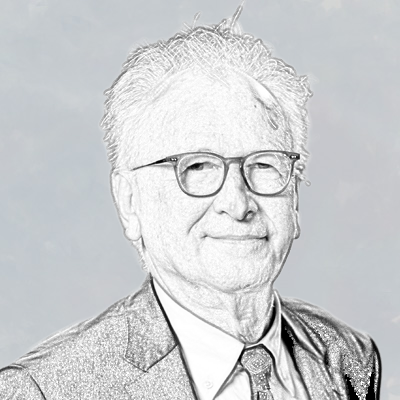
Alain FISCHER
Doctor, Professor Emeritus at the Collège de France, member of the French Academy of Sciences
Alain Fischer graduated in medicine in 1979 and became Professor of Immunology at Paris-Descartes University, then Director of the INSERM unit “Normal and pathological development of the immune system” in 1991. Head of the Pediatric Immunology and Hematology Unit (UIH) at Necker Hospital (1996-2012), he was elected Professor of Experimental Medicine at the Collège de France in 2014. President of the French Academy of Science since 2022 and member of the French Medicine Academy, Alain Fischer devotes his research to immune deficiencies acquired from birth and curative approaches using gene therapy. Chairman of the Conseil d'orientation de la stratégie vaccinale in 2020, he published “Protecting the Living : from sick children to the Covid crisis” (2024).
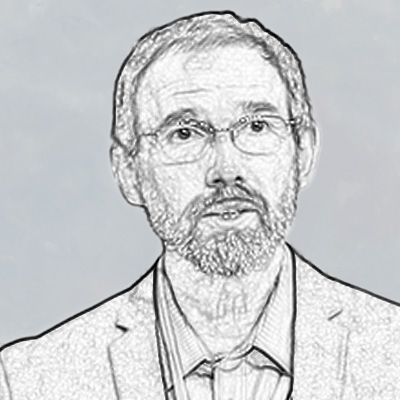
Marc FLEURBAEY
CNRS Research Director, Professor at the Paris School of Economics and Professor at the Collège de France
Marc Fleurbaey's research in economics and philosophy focuses on normative economics, distributive justice, and the evaluation of public policies. His primary areas of focus include the measurement of social protection, climate policies, health priorities, and optimal taxation. Author of "Beyond GDP" (2013) with Didier Blanchet, "A Theory of Fairness and Social Welfare" (2011) with François Maniquet, and "Fairness, Responsibility and Welfare" (2008). He was the lead author and coordinator for the IPCC’s Fifth Assessment Report, a member of the United Nations Committee on Development Policy, and chair of the International Panel for Social Progress. His research focuses on the economics of well-being and equity, with applications to climate economics, health economics and fiscal redistribution.
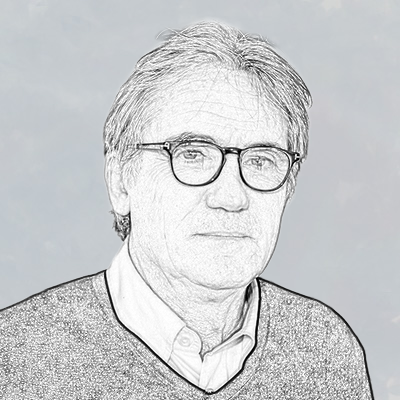
A graduate of the École normale supérieure de l'enseignement technique, agrégé of physical sciences, option in chemistry, and holder of a state thesis, he became a professor at the Université Joseph-Fourier in Grenoble in 1988. He set up there a research team and a laboratory for the chemistry and biology of metals, which he directed at the CEA-Grenoble center. In 2008, he became a professor at the Collège de France, where he holds the “Chemistry of Biological Processes” Chair and heads the Laboratoire de Chimie des Processes Biologiques, a joint research unit Collège de France-CNRS-Sorbonne University . An expert on the energy transition, he notably punished “Beyond the Doom and Gloom ! The Truths about the Energy Transition” (2020).
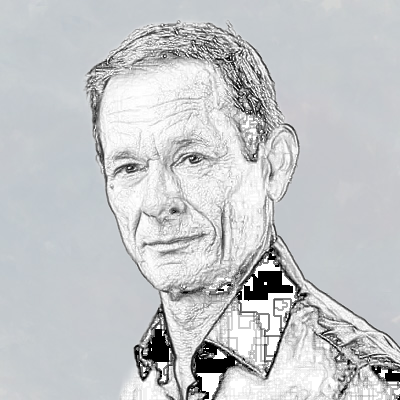
Patrice FRANCESCHI
Writer, adventurer
Patrice Franceschi is a French adventurer, writer, filmmaker, sailor, and pilot of Corsican descent. For over forty years, he has undertaken numerous expeditions worldwide and organized humanitarian missions in war zones such as Bosnia, Kurdistan, Somalia, and Afghanistan. He is renowned for completing the first round-the-world trip in an ultralight aircraft (1984–1987) and for captaining the three-masted ship La Boudeuse, leading scientific and humanitarian expeditions. Awarded the Goncourt Prize for Short Stories in 2015 for "Première personne du singulier", he is also honorary president of the Société des Explorateurs Français and a member of the Écrivains de Marine. His books and films, inspired by his travels, blend adventure, commitment, and reflection on freedom and resistance.
Debate 10 • At the frontiers of the unknown: why does adventure transform us?
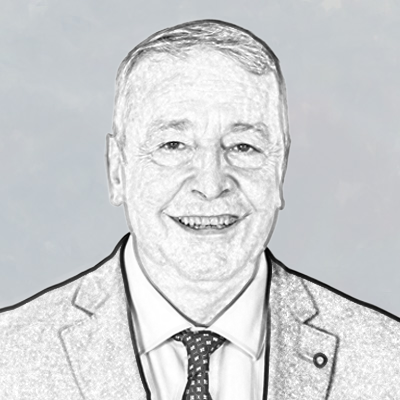
Antoine Frérot is a graduate of the École Polytechnique (class of 1977), an engineer in the Corps des Ponts et Chaussées, and holds a doctorate from the École nationale des ponts et chaussées. After beginning his career in 1981 as a research engineer at the Central Design Office for Overseas Territories, he joined the Centre for Studies and Research at the École nationale des ponts et chaussées in 1983 as a project manager, before becoming its deputy director from 1984 to 1988. From 1988 to 1990, he held the post of head of financial operations at Crédit National. In 1990, Antoine Frérot joined the Compagnie Générale des Eaux as a project manager, and in 1995 became managing director of CGEA Transport. In 2000, he was appointed Chief Executive of CONNEX, the transport division of Vivendi Environnement, and a member of the Executive Board of Vivendi Environnement. In January 2003, he was appointed Chief Executive of Veolia Eau, the water division of Veolia Environnement, and Deputy Chief Executive of Veolia Environnement. In November 2009, he was appointed Chief Executive Officer, and in December 2010, Chairman and Chief Executive Officer of Veolia Environnement. On 1 July 2022, following the separation of the roles of Chairman and Chief Executive Officer, he became Chairman of the Board of Directors of Veolia Environnement.
Debate 2 • Responsible governance: an imperative for tomorrow
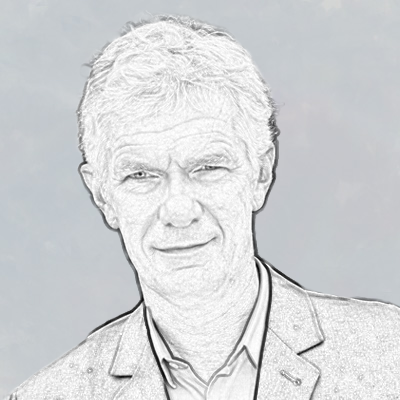
Didier Fusillier is a French theater director and cultural manager. After studying law, literature, and philosophy, he began his career in theater, creating the street festival "Les Inattendus" and founding the Via theater. He gained recognition by directing the Manège de Maubeuge and then leading the cultural programming for Lille 2004, European Capital of Culture. From 2015 to 2023, he served as president of the Parc et Grande Halle de la Villette, where he developed a cross-disciplinary and popular programming and created the Micro-Folies network to democratize access to culture. Since 2023, he has been president of the Réunion des musées nationaux and the Grand Palais, overseeing the reopening of the monument after its renovation and working to make it a more accessible and festive venue, especially during the 2024 Olympic Games.
Debate 31 • Culture and knowledge: the responsibility to pass them on
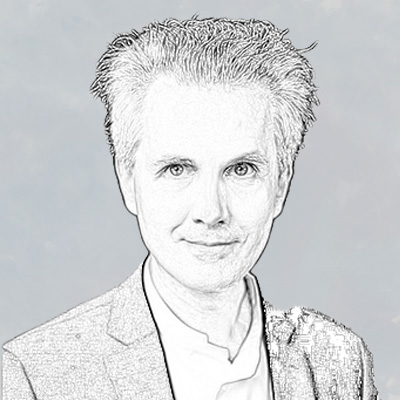
Raphaël GAILLARD
Professor of Psychiatry and Head of the University Hospital Psychiatry Department at Sainte-Anne Hospital, member of the Académie française
Raphaël Gaillard is a French psychiatrist and neuroscientist renowned for his work on schizophrenia and the connections between artistic creation and mental illness. A professor at Université Paris Cité and a practitioner at Sainte-Anne Hospital, he leads an expert center dedicated to psychotic disorders. His research delves into the biological foundations of the mind and how psychological vulnerabilities can illuminate creativity. As an essayist, he has published several books that blend science, clinical practice, and humanist reflection; including "L'homme augmenté : futur de nos cerveaux" (2024) and recently "L'âme d'une épée" (2026). In 2023, he was elected to the Académie française, crowning a career that combines scientific rigor, medical commitment, and a passion for literature.
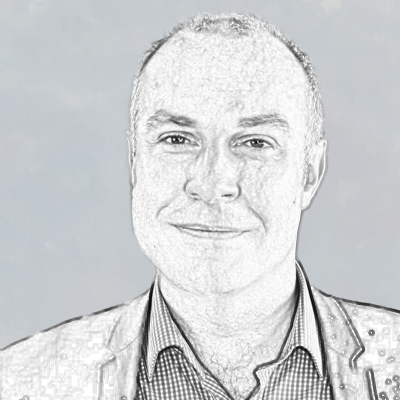
François Gemenne is an expert in environmental geopolitics, migration, and climate policy. A professor at HEC Paris and a researcher at Université de Liège, he directs the Hugo Observatory and actively contributes to the work of the GIEC (IPCC). His research mainly focuses on environmental migration, climate adaptation policies, and international climate governance. As the coordinator of several major European projects, including MAGYC and HABITABLE, he examines the links between climate change, human mobility, and migration policies. The author of numerous books and scientific articles, he also teaches at Sciences Po Paris and the Sorbonne. Actively engaged in civil society, he chairs the Scientific Council of the Fondation pour la Nature et l’Homme and the Board of Directors of the NGO Climate Voices, which seeks to connect young people from the Global North and South around climate issues.
Debate 26 • Should responsibility apply to technological innovation?
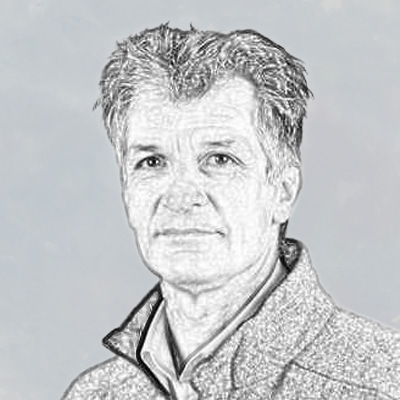
Born in Paris, Alain Ghersen became a major figure in 1980s-1990s mountaineering. A master of "Bleau" bouldering, he pushed technical limits with his highly precise, static climbing style. As a high-altitude mountain guide and instructor at France's elite ENSA school, he achieved legendary status through historic solos in the Mont Blanc massif. In 1990, he completed a mind-blowing trilogy (the American Direct on the Drus, the Walker Spur on the Grandes Jorasses, and the Peuterey Integral), followed by the first solo winter ascent of Divine Providence in 1993. Also holding a PhD in philosophy, he analyzes climbing from an intellectual perspective, exploring risk and commitment in his seminal book Risque et alpinisme (2016).
Debate 10 • At the frontiers of the unknown: why does adventure transform us?
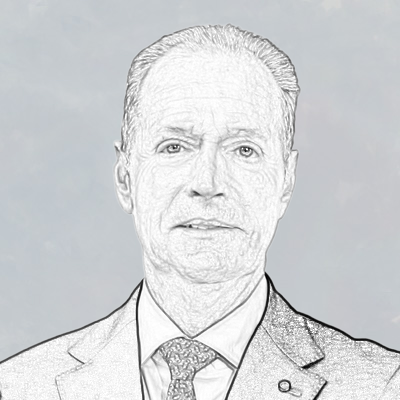
Roland GILLET
Professor of Financial Economics at the Sorbonne (Paris 1) and the Université Libre of Brussels
Roland Gillet is a Belgian economist specializing in financial economics. Holding a PhD in economics, he is a full professor at the University of Paris 1 Panthéon-Sorbonne, where he directs the professional master’s program in "Financial Management and Taxation," and a professor at the Solvay Brussels School of Economics & Management (ULB). He has been a visiting researcher at prestigious universities such as Harvard, MIT, Fudan, and Sherbrooke, and is a member of several scientific councils, including the Laboratory of Excellence in Financial Regulation (LabEx ReFi) in Paris. A recognized expert, he has advised public and private institutions on financial crises, particularly in the Eurozone. His research focuses on financial market regulation, portfolio management, and market efficiency. He is also the author of several reference works in these fields.
Debate 5 • How can we promote responsible finance and sustainable investment?
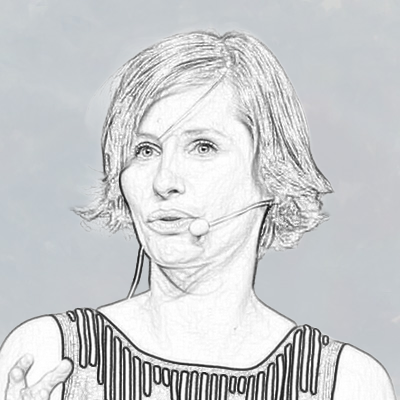
An expert in social impact innovation, Laurence trained at HEC and began her career in consulting at Bain & Company before leading Ashoka, the world’s first global network of social entrepreneurs. At the age of 22, she co-founded an NGO that develops projects in Mongolia and Togo, which is still operational today. In 2016, Laurence launched MySezame, the first social startup focused on acculturation and training, empowering leaders and employees to harness the full potential of their companies to address social and environmental challenges through new, more planet- and people-friendly innovation models. She is a member of the Entreprendre network, the APM (Association for Management Progress), and the Siècle des Femmes. Since 2025, she has served as president and co-founder of the La Concorde endowment fund, which aims to preserve and promote democracy in all its public interest dimensions.
Debate 11 • What responsibility does philanthropy have in a fragile democracy?
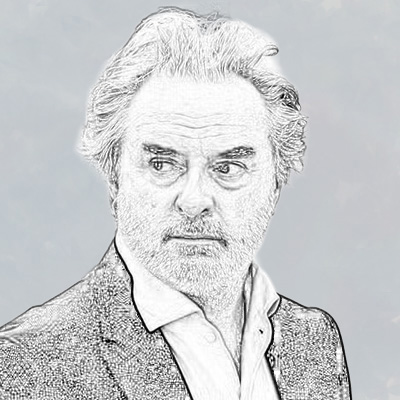
After earning a master’s degree in literature at the Sorbonne, Jean-Christophe Grangé worked as an advertising copywriter before turning to investigative journalism. Starting in 1989, he traveled the world with photographer Pierre Perrin, selling their reports to Paris Match, the Sunday Times, and National Geographic. He won the Reuters Prize in 1991 and the World Press Photo Award in 1992. In 1994, he published "Le Vol des cigognes" (The Flight of the Storks, 1994), followed by the blockbuster "Les Rivières pourpres" (The Crimson Rivers, 1998), which Mathieu Kassovitz adapted for film in 2000. Translated into some 30 languages and sold in the millions, nearly all his novels have been adapted for cinema or television. The undisputed master of French thrillers, he combines meticulous research, dark plots, and mesmerizing atmospheres. In 2025, he released "Je suis né du diable" (I Was Born of the Devil), a story even more gripping than his thrillers—because every word is true. He infuses his youthful memories with the intensity of a suspense novel.
Debate 32 • Creativity and inventiveness : how do we generate new ideas? Part 2.
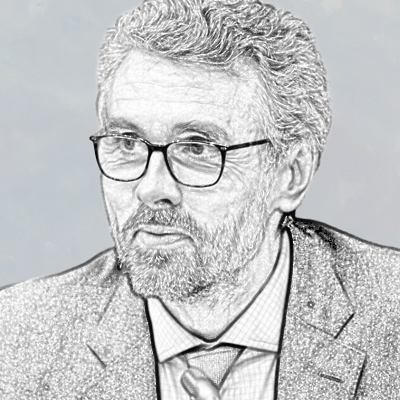
Marc Guillaume is a senior French civil servant, a graduate of Sciences Po Paris and the ENA (Victor Hugo class), who serves as Vice-President of the Council of State in May 2026, succeeding Didier-Roland Tabuteau. He began his career in 1991 at the Council of State before holding key legal and institutional positions: Director of Legal Affairs at the Ministry of Defense (1999–2002) and Director of Civil Affairs and the Seal at the Ministry of Justice (2002–2007). A central figure in the French state apparatus, he later served as Secretary-General of the Constitutional Council (2007–2015), Secretary-General of the Government (2015–2020), and Prefect of the Île-de-France region and Paris (2020–2026), before returning to head France's highest administrative court.
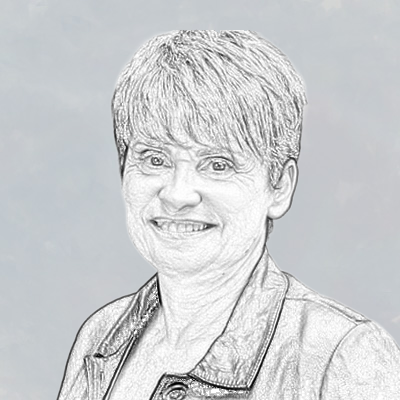
Caroline GUILLAUMIN
Executive Director of Communications at Orange, Deputy Chair of the Orange Foundation
Caroline Guillaumin has been Head of Communications at the Orange Group since 2 January 2023. She has also served as Deputy Chair of the Orange Foundation since 2023 and of the Cité des Télécoms since 2024. Through the Orange Foundation, she supports the development of initiatives promoting music, particularly choral singing, as a means of fostering inclusion, education and social cohesion. She began her career in 1989 in the high-tech sector, working for start-ups in France and the United States. In 1997, she joined Verity as Director of Marketing and Communications for Europe, before holding senior roles in communications and sustainable development at Alcatel, SFR and Alcatel-Lucent. In 2010, she became Director of Communications for the Société Générale Group, then Director of Human Resources in 2017. Caroline Guillaumin is a graduate of the Institut d’Études Politiques de Bordeaux and holds a Master of Arts in International Relations from Boston University.
Debate 43 • Does music have the power to bring us together ?
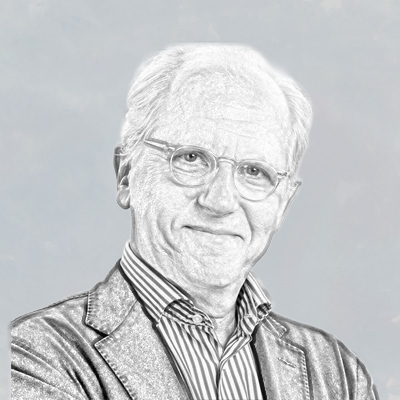
David Guiraud, a graduate of Néoma Business School and the Conservatoire libre du cinéma français, made his mark on the French press by leading Les Échos from 1999 to 2008, then Le Monde from 2008 to 2010 as Vice President of the Board. Since 2014, he has been Chairman of the Supervisory Board of Ouest-France, one of France’s leading regional press groups. Since 2020, he has also served as President of ASPDH, the association that owns the Sipa Ouest-France group.
Debate 11 • What responsibility does philanthropy have in a fragile democracy?
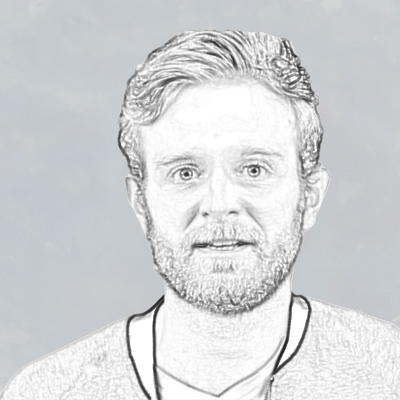
A French foil fencer, Brice Guyart is a major figure in international fencing. Trained at Cercle d’Escrime du Vésinet and Rueil Athletic Club, he quickly rose to top-level competition thanks to his tactical skills and precision. He reached the peak of his career at the Olympic Games, winning team gold in Sydney in 2000 before claiming the supreme individual title in Athens in 2004. Also, a two-time team World Champion (2001, 2003), he accumulated numerous international podiums until his retirement in 2012. A graduate of ESCP Europe, he successfully transitioned into sports management and corporate training. Highly involved in sports administration, he played a key role within the Organising Committee for the Paris 2024 Olympic and Paralympic Games.
Debate 14 • Do champions necessarily have to be role models?
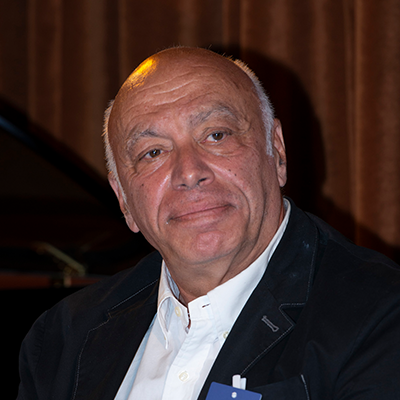
A full professor and holder of a State doctorate in mathematics, he served as President of Paris 1 Panthéon-Sorbonne University from 1989 to 1994 and as First Vice-President of the French Conference of University Presidents from 1992 to 1994. He was Chair of the Steering Committee of the World Conference on Higher Education from 1994 to 1999. In 2004, he was appointed Director of the Higher Education Division at UNESCO, and led its research and educational foresight activities until 2014. He served a second term as President of Panthéon-Sorbonne University from 2016 to 2021.
Debate 13 • Is the development of women’s scientific vocations a collective responsibility?
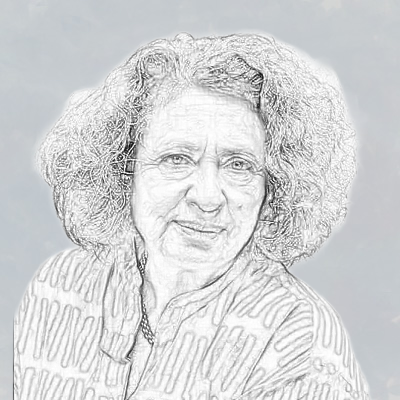
Dr Ghada Hatem-Gantzer studied medicine at the Necker–Enfants Malades Faculty of Medicine in Paris, specialising in obstetrics and gynaecology. She holds a Master’s degree in medical management from ESCP Europe, as well as several university diplomas, notably in violence against women and the legal compensation of personal injury. In 2003, she was appointed Head of Department at the maternity unit of the Bégin Military Hospital. In 2010, she moved to Delafontaine Hospital in Saint-Denis, where she developed innovative care programmes, particularly in infertility and breast cancer, in partnership with the Institut Curie. In 2016, Dr Hatem-Gantzer founded the Maison des femmes de Saint-Denis, the first organisation in France to provide comprehensive care for women who are victims of violence and female genital mutilation. Today, the Maison des Femmes represent more then thirty organisations across the country, in the overseas territories and in Belgium. She received the Simone Veil Prize in 2018.
Debate 45 • Caring for others: everyone’s responsibility to humanize society
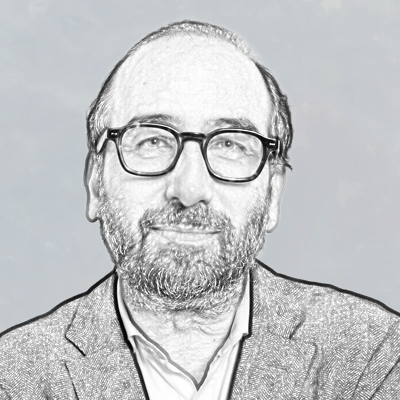
Éric Hazan is an entrepreneur and managing partner of an investment fund. A specialist in the impact of artificial intelligence on the economy, society, and business models, he was a Senior Partner at a leading strategy consulting firm until 2025, advising organizations across Europe, the United States, Asia, and the Middle East for more than twenty years on their growth, digital transformation, and AI strategies. He teaches at HEC Paris and Sciences Po, and is co-author of Faut-il encore décider ? (with Olivier Sibony) and Révolution par les territoires (with Frédéric Salat-Baroux).
Debate 30 • In the age of artificial intelligence, how can we distinguish fact from fiction?
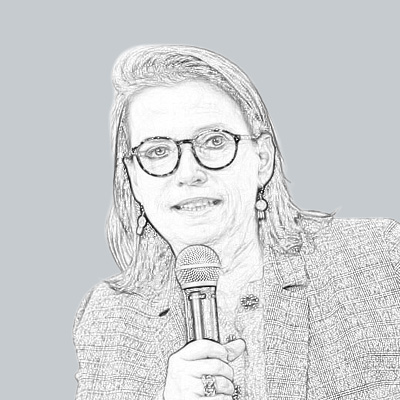
A graduate in law from Université Paris II and CELSA, Claire Hédon began her career in radio (France Bleu, RFI, France Inter). From 2003 to 2017, she hosted "Priorité santé" (Health Priority) on RFI and later became head of magazine programs. Her commitment to social justice began in 1992 with ATD Quart Monde, where she fought against extreme poverty and for access to rights. Starting as a volunteer and later becoming a leader, she was elected president in 2015, driving major advancements such as the recognition of social precarity as a form of discrimination and the Territoires zéro chômeur (Zero Unemployment Territories) project. A member of national bodies, she was appointed France’s Defender of Rights from 2020 to 2026, continuing her fight for the dignity and equality of the most vulnerable.
Serge HEFEZ
Serfe Hefez, psychiatrist, psychoanalyst and author
Serge Hefez heads the family therapy unit in the child and adolescent psychiatry department at the Pitié-Salpêtrière Hospital in Paris. As an HIV specialist, he also directs the Social and Psychological Support Center for People Affected by AIDS (Espas) and works at the National Institute for Health Education and on issues related to substance abuse. He is the creator of several television documentary series, including Psyché and Accro on France 5. In 2023, he was appointed by the Minister of Solidarity, Aurore Bergé, as co-chair of a commission on parenting intended to address the crisis brought to light by the riots that followed the death of Nahel Merzouk. The author of numerous books, he published “La Danse du couple”(2002) with Danièle Laufer, as well as “La fabrique de la famille” (2016). Finally, for the past decade, he has been conducting specialized counseling sessions for young people undergoing gender transition. He wrote about this topic in « Que faire de la différence des sexes ? » (2025) and « Les Filles et les Garçons d'aujourd'hui expliqués aux adultes désorientés » (2026).
Nathalie Heinich is a sociologist, emeritus research director at the CNRS, a member of the CRAL, and an associate member of the LAHIC. She holds a Ph.D. from the EHESS on the social history of the concept of the artist and specializes in the sociology of artistic professions and cultural practices. Her work also focuses on identity crises, the epistemology of the social sciences, and the sociology of values. A co-founder of the journal “Sociologie de l’art”, she serves on the editorial boards of several academic journals, including “Sociologie de l’art”, “Music and Arts in Action”, “Cultura. Revista de gestión cultural”, “Persona Studies”, and “Cités”. The author of more than forty books, she has devoted her research to the status of the artist, the concept of authorship, contemporary art, questions of identity, values, and the history of sociology.
Debate 39 • Do intellectuals still have a responsibility in public debates ?
Rémy Heitz is a prominent French magistrate. His career has alternated between judicial and administrative roles. He has served in the courts and as a prosecutor, as well as chief of staff to a minister and advisor to a prime minister. He has served three times as director of central administration: director of road safety and traffic at the Ministry of Transportation, where he also served as interministerial delegate for road safety; and, at the Ministry of Justice, director of general administration and facilities and director of criminal affairs and pardons. In the judiciary, he served as president of the Bobigny District Court and as chief justice of the Colmar Court of Appeals. In the public prosecutor’s office, he served as an assistant prosecutor in Pontoise, deputy prosecutor in Paris, public prosecutor in Saint-Malo, Metz, and Paris, and then as Attorney General at the Paris Court of Appeals—the last position he held before his appointment as Attorney General at the Court of Cassation in 2023. In this capacity, he also serves as president of the panel of the High Council of the Judiciary responsible for prosecutors, vice president of the board of directors of the National School for the Judiciary, and representative of the public prosecutor’s office before the Court of Justice of the Republic.
Laurence Herszberg began her career in film and production before becoming a key figure in the development of international festivals and events. She notably led the Forum des Images in Paris, where she modernized the institution and expanded its audience. In 2010, she founded Séries Mania, a festival dedicated to television series, which she grew into a major European event, now based in Lille since 2018. Committed to creativity and innovation, she advocates for the recognition of series as a full-fledged art form and promotes the international influence of European storytelling.
Debate 32 • Creativity and inventiveness : how do we generate new ideas? Part 2.
Alice HERVÉ
Head of Audience Development at the Théâtre de l'Odéon and co-founder of the Adolescence et Territoire(s) program
Alice Hervé plays a key role in cultural outreach and community engagement at the Odéon-Théâtre de l'Europe in Paris. As the coordinator for the flagship program Adolescence et territoire(s), she orchestrates this deep human and artistic journey season after season. The initiative gathers around fifteen teenagers from diverse partner districts (Paris 17th, Saint-Ouen, Gennevilliers), guiding them through hundreds of hours of theater workshops toward a collective creation staged by guest directors. Strongly committed to accessibility and inclusivity, Alice Hervé is also committed to carrying out projects at the Odéon aimed at socially disadvantaged audiences and people with disabilities, launching inclusive theater workshops and improving cultural accessibility.
A graduate of École Polytechnique in 1994 and of École Nationale des Ponts et Chaussées, Christel Heydemann began her career at the consulting firm Boston Consulting Group before joining Alcatel in 1999, where she held various executive positions, notably during the merger between Alcatel and Lucent Technologies. Initially appointed Sales Director for France and a member of the executive committee, she was promoted in 2011 to the position of Executive Vice President for Human Resources and Transformation of the group. She joined Schneider Electric in 2014 and became Chairwoman and Chief Executive Officer of Schneider Electric France in 2017. Promoted to Executive Vice President, Europe Operations for the group in 2021, she left this position a year later to become Chief Executive Officer of Orange S.A. In 2023, she unveiled the group’s strategic plan, entitled “Lead the Future,” aimed at leveraging the recognized excellence of its core business while achieving sustainable growth across Europe, Africa, and the Middle East.
Ivan JABLONKA
Historian, editor, writer, professor of contemporary history at Sorbonne Paris Nord University
A graduate of the École normale supérieure, Ivan Jablonka is a member of the Institut universitaire de France. He is co-director of the “La République des Idées” series published by Seuil and co-founder of the online journal La Vie des Idées. A specialist in social and contemporary history, he conducts research on childhood, memory, and social violence, while developing a form of writing that blends historical inquiry with literary narrative. His books, translated into several languages, have received numerous awards. Among his best-known works are "Histoire des grands-parents que je n’ai pas eus" (2012), which received the Senate Prize for History Books and the Guizot Prize, and "Laëtitia ou la fin des hommes" (2016), which was awarded the Le Monde Literary Prize and the Médicis Prize.
François Jackow has developed strong industrial and leadership expertise through various roles around the world at Air Liquide, which he joined in 1993 before becoming CEO in June 2022. Throughout his career, he has notably led Innovation and Technologies, the Large Industries and Healthcare businesses, as well as the Strategy function at this leader in gases, technologies, and services for industry and healthcare. He also played an active role in the Group’s international expansion, participating in major, transformative acquisitions, such as that of Airgas in the United States in 2016 and that of DIG Airgas in South Korea 10 years later. Since his appointment to the Executive Board, he has notably successfully led the rollout of the ADVANCE strategic plan, aimed at combining growth with a sustainable future, as well as the development of several growth markets, including electronics, industrial decarbonization, and healthcare. He is an alumnus of the École Normale Supérieure in Paris, holds a master’s degree in chemistry from Harvard University, and an MBA from the Collège des Ingénieurs.
Debate 26 • Should responsibility apply to technological innovation?
Holding a dual Master’s degree in Management and Organizational Psychology, Nathalie Jacquet has built her career at the crossroads of the corporate world, higher education and talent development. She began her career at Air France before joining Reims Management School, BPCE and later Sciences Po. In 2010, she became Director of Sciences Po’s Reims campus when it first opened. She led its development until 2017, notably contributing to the creation of two international programmes focusing respectively on North America and Africa. She then joined Sciences Po in Paris, where she was responsible for partnership strategy and philanthropy, and notably oversaw the Sciences Po 2022 fundraising campaign. In 2024, Nathalie Jacquet joined Société Générale. She currently heads Société Générale University, where her role is to support skills development, lifelong learning and the transformation of the Group’s professions. In this capacity, she helps make learning and talent development key strategic drivers in adapting to the profound changes reshaping the world of work.
Patrick JOHNSON
Deputy Chief Executive Officer, Research & Science, Member of the Executive Committee, Dassault Systèmes
Patrick Johnson has been Deputy Chief Executive Officer, Research & Science, at Dassault Systèmes since 2004 and a member of the Executive Committee since 2023. He defines the scientific foundations of 3D UNIV+RSES, integrating AI to transform industry, the life sciences and infrastructure. Having joined the company in 1996 as a software engineer, he has contributed to major innovations in PLM, CATIA and AI. He has developed multidisciplinary research spanning mathematics, data science, biology, medicine and physics, whilst strengthening international scientific partnerships. A graduate of ISAE-SUPAERO, he sits on the Scientific Advisory Board of INRIA, amongst other roles.
Debate 46 • Artificial Intelligence: between risks and promises
Anne-Laure Kiechel, a graduate of HEC, Sankt Gallen, and holder of a master's in mathematics, began her career at Lehman Brothers in 1999, leading capital markets for France and the Benelux. In 2009, she joined Rothschild in Paris and became a partner in 2014. She founded the Rothschild Sovereign Advisory Group, and advised Greek Prime Minister Alexis Tsipras from 2016 to 2019. Then, she launched Global Sovereign Advisory (GSA), an independent firm advising around twenty countries. A member of the UN’s Committee for Development Policy (2022–2024), she has over 25 years of experience in capital markets and sovereign advisory.
Debate 5 • How can we promote responsible finance and sustainable investment?
Étienne KLEIN
Physicist, specialist in the philosophy of science, member of the Academy of Technologies
A graduate of CentraleSupélec with degrees in theoretical physics, Étienne Klein is a research director at the CEA, where he heads the Laboratory for Research on Material Sciences (LARSIM). As a professor at CentraleSupélec, he has authored numerous essays on physics and the nature of time, always striving to make science and scientific discoveries accessible to all. His book "La physique selon Étienne Klein" (2021) exemplifies this mission, while his weekly radio show "La conversation scientifique" on France Culture brings science to a broader audience. His work "Courts-circuits" (2023) further encourages breaking down silos in scientific thought and advocates for transdisciplinarity. Étienne Klein is also a member of the Académie des Technologies.
Debate 30 • In the age of artificial intelligence, how can we distinguish fact from fiction?
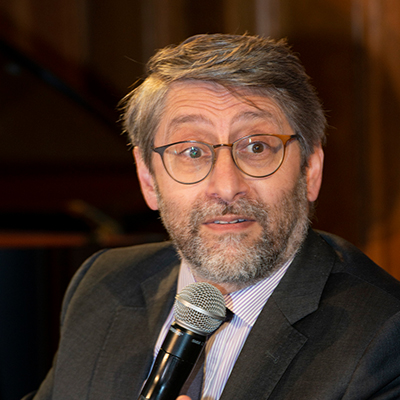
Since 2014, he has served as the Chief Rabbi of France. From 2005 to 2009, he was a member of the National Consultative Ethics Committee and served as Secretary General of the French Rabbinate Association. Initially the rabbi of Reims, he became the General Israeli Chaplain of the French Air Force in 2000, later extending this role to all branches of the military from 2007 to 2014.
A champion of interfaith dialogue, he has authored several books on the subject, including "Les Enfants d'Abraham: Un chrétien, un juif et un musulman dialoguent" (2011), co-written with Alain de La Morandais and Malek Chebel, and "Réinventer les aurores" (2020) which won the Edgar Faure Political Literature Prize. In 2024, he published "Comme l’espérance est violente", an essay aimed at combating the collective depression he believes is afflicting French society.
Debate 45 • Caring for others: everyone’s responsibility to humanize society